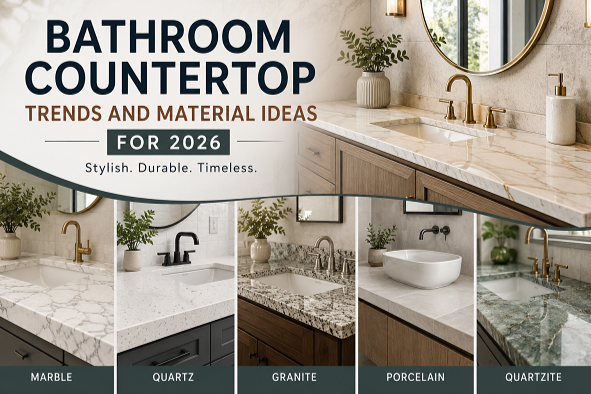
When I plan a bathroom update, I first look at the household’s routine, available space, and maintenance expectations. I also consider how the countertop will connect with the vanity, flooring, wall color, and fixtures. For homeowners in Dublin, Columbus, Ohio, Keystone Granite can help compare natural and engineered surfaces based on both appearance and practical needs.
Natural stone remains an important part of bathroom design because every slab offers its own movement and character. For example, marble countertops for bathroom spaces can create a refined and timeless appearance. However, I always explain the care requirements before recommending marble for a busy family bathroom.
Key Takeaways
- Quartz, granite, porcelain, marble, and quartzite remain leading choices, but each material offers different maintenance, design, and durability benefits.
- Warm colors, bold veining, matte finishes, and integrated details will shape many bathroom countertop designs in 2026.
- The best countertop depends on the room’s use, so I consider moisture, cleaning habits, budget, vanity size, and long-term style before selecting a material.
What Is Driving Bathroom Countertop Trends in 2026?
In 2026, I see homeowners moving away from bathrooms that feel plain, cold, or overly matched. Instead, they want rooms that feel calm, personal, and comfortable. As a result, bathroom countertops now play a larger role in the overall design.
Warm whites, soft beige tones, light brown shades, and creamy stone patterns continue to gain attention. These colors make a bathroom feel welcoming without making it look dark. Moreover, they work well with wood vanities, brushed metal fixtures, and natural-looking floors.
Homeowners also want more personality. Therefore, dramatic veins, textured finishes, and unusual stone patterns have become stronger design choices. Still, the goal is not to create visual clutter. I usually recommend one main statement surface and quieter materials around it.
Practical needs also shape current countertop choices. Since bathrooms face constant moisture, homeowners want surfaces that clean easily and resist stains. Therefore, low-maintenance materials such as quartz and porcelain remain popular.
At the same time, many people want a spa-like bathroom. Natural stone, warm lighting, simple storage, and soft colors help create that feeling. Consequently, countertop design has moved beyond basic function and become part of the homeowner’s daily comfort.
Best Bathroom Countertop Material Ideas for 2026
When I compare bathroom countertop materials, I look beyond color alone. I study water resistance, cleaning needs, edge options, repair requirements, and long-term appearance. Although no material works perfectly for every home, several options stand out in 2026.
Quartz Countertops for Easy Daily Care
Quartz remains one of my leading recommendations for busy bathrooms. It offers a smooth, nonporous surface, so it does not need regular sealing. In addition, it handles common bathroom spills well when homeowners clean them promptly.
Another advantage involves design variety. Quartz comes in soft solids, marble-inspired patterns, warm neutral colors, and bold veined designs. Therefore, I can use it in modern, transitional, traditional, or minimalist bathrooms.
Quartz works especially well in family bathrooms. Children may leave water, toothpaste, makeup, or soap on the counter. However, homeowners can usually clean the surface with mild soap, water, and a soft cloth.
Still, I advise homeowners to avoid harsh chemicals and rough cleaning pads. These products may dull the finish over time. Also, professional fabrication matters because accurate sink cutouts and clean seams improve both appearance and performance.
Marble Countertops for Timeless Character
Marble brings natural movement and elegance into a bathroom. Every slab has its own veins, shades, and details. Therefore, homeowners who want a one-of-a-kind vanity often consider marble.
White marble with gray veining remains a classic option. However, warmer marble colors now attract more attention. Cream, beige, gold, green, and brown details can make a bathroom feel richer and more inviting.
Although marble looks beautiful, it needs thoughtful care. It can absorb liquids, and acidic products may leave dull marks. Therefore, I recommend sealing the surface when required and cleaning spills quickly.
Marble often works best in a powder room, guest bathroom, or carefully maintained primary bathroom. In these spaces, homeowners can enjoy its natural beauty without exposing it to the heaviest daily use.
Granite Countertops for Natural Strength
Granite offers strong performance and natural variation. It resists everyday wear well, and its mineral patterns add depth to the vanity. Moreover, homeowners can choose from light, dark, subtle, and dramatic slabs.
For 2026, I expect softer granite patterns to receive more attention. Instead of choosing only heavily speckled designs, many homeowners now prefer gentle movement, warm undertones, and quieter mineral details.
Granite may need periodic sealing, depending on the stone and its finish. Therefore, I recommend asking the fabricator about the specific slab rather than following a general maintenance schedule.
Also, granite works well in bathrooms with wood cabinetry. A warm stone pattern can connect the vanity with the flooring and metal fixtures. As a result, the entire bathroom looks more coordinated.
Quartzite for a Natural Yet Durable Look
Quartzite appeals to homeowners who enjoy natural stone but want strong everyday performance. It often offers flowing veins and elegant color movement. Therefore, some quartzite slabs can provide a marble-like appearance with a different durability profile.
However, quartzite quality and porosity can vary. For that reason, I advise homeowners to inspect the actual slab and discuss sealing with an experienced supplier. A sample alone may not show the full movement or color range.
Quartzite can suit a luxury primary bathroom, especially when the vanity serves as a focal point. Moreover, a carefully selected slab can coordinate with shower walls, flooring, and decorative tile.
Still, fabrication requires skill. Hard natural stone needs accurate cutting, polishing, and edge finishing. Therefore, the fabricator’s experience matters as much as the material itself.
Porcelain Slabs for a Clean, Modern Bathroom
Porcelain slabs continue to grow as a countertop option. They offer a dense surface that resists moisture and common stains. In addition, manufacturers can produce patterns that resemble marble, concrete, limestone, or other natural materials.
Porcelain also supports thin, modern countertop profiles. Therefore, it works well with floating vanities and simple cabinet designs. A slim edge can make a small bathroom feel lighter and less crowded.
However, porcelain edges can require careful fabrication. The material needs experienced handling during cutting and installation. Consequently, homeowners should choose a fabricator who regularly works with large-format porcelain.
I especially like porcelain for modern bathrooms with large wall tiles. The countertop can continue the same visual style without adding too many competing patterns.
Solid-Surface Countertops for Seamless Design
Solid-surface materials offer a smooth and consistent appearance. Fabricators can create integrated sinks and nearly invisible seams with certain designs. Therefore, this material works well when homeowners want a clean, simple vanity.
The surface also feels warmer and softer than many stone options. Moreover, small scratches may allow professional refinishing, depending on the material and level of damage.
However, solid surface does not provide the same natural depth as granite, marble, or quartzite. For that reason, I recommend it mainly for homeowners who value function, easy cleaning, and visual simplicity.
It can work especially well in accessible bathrooms. Smooth transitions and integrated features may reduce areas where moisture and dirt collect.
Concrete Countertops for Custom Character
Concrete gives homeowners control over color, shape, thickness, and texture. Therefore, it can create a custom look that suits industrial, modern, rustic, or organic bathroom designs.
A skilled craftsperson can add pigments, aggregates, or subtle movement to the surface. As a result, concrete does not have to look rough or unfinished. It can appear smooth, refined, and highly designed.
However, concrete needs proper sealing because the surface can absorb water and stains. It may also develop small hairline cracks as it ages. Some homeowners appreciate that natural character, while others prefer a more consistent surface.
Because of these factors, I recommend concrete only when the homeowner understands its maintenance and aging process.
Laminate Countertops for Budget-Friendly Updates
Laminate remains a practical option for homeowners working with a limited budget. Modern designs can copy stone, wood, and concrete more effectively than older patterns. Therefore, laminate can refresh a bathroom without requiring the cost of natural stone.
It also offers many colors and patterns. In addition, its lighter weight can help with certain vanity projects.
However, homeowners must protect the seams and edges from standing water. Moisture can damage the material if it reaches the inner core. Therefore, proper installation and careful daily use remain important.
I often recommend laminate for guest bathrooms, rental properties, or temporary renovations. It provides style and function while keeping the overall project cost under control.
Quick Bathroom Countertop Material Comparison
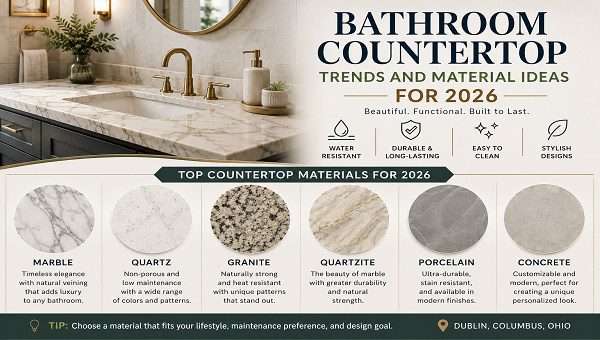
| Material | Main Advantage | Maintenance Level | Best Use |
| Quartz | Easy cleaning and broad design selection | Low | Family and primary bathrooms |
| Marble | Natural elegance and unique veining | High | Powder rooms and luxury bathrooms |
| Granite | Natural strength and character | Moderate | High-use bathrooms |
| Quartzite | Premium natural movement | Moderate | Statement vanities |
| Porcelain | Moisture resistance and slim profiles | Low | Modern and compact bathrooms |
| Solid Surface | Smooth seams and integrated details | Low | Simple or accessible bathrooms |
| Concrete | Custom color and shape | Moderate to high | Industrial or custom designs |
| Laminate | Affordable style | Moderate | Guest baths and budget projects |
Leading Bathroom Countertop Style Trends
Material selection matters, but the color, finish, edge, and installation style also shape the final result. Therefore, I consider these details before approving a countertop design.
Warm Whites and Soft Neutral Colors
Pure white bathrooms can sometimes feel cold. Consequently, many 2026 designs use warmer shades such as ivory, cream, sand, mushroom, taupe, and light greige.
These colors reflect light while adding softness. Moreover, they connect naturally with oak, walnut, and painted wood vanities.
In Dublin, Columbus, Ohio, warm neutral countertops can also help create a comfortable interior during darker or colder parts of the year. Therefore, I often pair them with layered lighting and warm metal fixtures.
Bold and Expressive Veining
Strong veining has become an important way to add personality. A countertop with gold, brown, charcoal, or green movement can become the main feature of the bathroom.
However, I avoid using bold patterns on every surface. Instead, I let the countertop lead and keep the surrounding tile quieter. This approach creates balance and makes the vanity look intentional.
Honed and Matte Finishes
Polished countertops still offer a clean and classic look. However, honed and matte finishes continue to attract homeowners who want a softer appearance.
A low-sheen finish can make natural stone feel more relaxed. In addition, it often works well with wood, textured tile, and brushed fixtures.
Still, the finish can affect maintenance. Therefore, I ask the supplier how the chosen surface handles water marks, oils, and cleaning products before making a final decision.
Integrated Backsplashes
A short backsplash remains practical, but many homeowners now choose taller countertop backsplashes. Some continue the same slab several inches upward, while others extend it toward the mirror.
This approach reduces grout lines and creates visual flow. Moreover, matching the countertop and backsplash can make a small vanity look wider.
For a dramatic design, I may use a full-height slab behind the sink. However, I keep the mirror, lighting, and fixtures simple so the stone remains the main feature.
Slim Countertop Profiles
Thick countertops create a strong and traditional appearance. In contrast, slim profiles support modern and minimalist bathrooms.
A thin porcelain or engineered surface can look especially attractive on a floating vanity. As a result, the bathroom feels more open.
However, the cabinet must support the selected material correctly. Therefore, I involve the fabricator and cabinet installer before confirming the final thickness.
Mixed Materials and Natural Texture
Many homeowners no longer want every bathroom element to match exactly. Instead, they combine stone, wood, metal, ceramic tile, and textured paint.
For example, a warm quartz countertop can sit above a walnut vanity with brushed brass hardware. Similarly, a quiet granite can pair with handmade-looking tile and matte black fixtures.
The key involves repetition. I usually repeat one color or texture in two or three places. Consequently, the bathroom feels layered without looking random.
How I Match the Countertop to the Bathroom
I do not recommend the same material for every bathroom. Instead, I consider who uses the room and how often they use it.
Primary Bathrooms
For a primary bathroom, I balance appearance with everyday convenience. Quartz, granite, quartzite, and porcelain often work well because they combine style with practical performance.
I also consider vanity size. A long double vanity may display more pattern than a small sink area. Therefore, I inspect the full slab before selecting a strongly veined material.
Family Bathrooms
Family bathrooms need surfaces that handle busy routines. Consequently, I often recommend quartz or another low-maintenance option.
I also suggest undermount sinks because they allow homeowners to wipe water directly from the counter into the basin. In addition, simple edge profiles reduce detailed areas that need cleaning.
Powder Rooms
A powder room gives homeowners more freedom. Since the space usually receives lighter use, marble, dramatic granite, custom concrete, or bold quartz can work well.
Moreover, the smaller countertop area may allow the homeowner to choose a premium remnant. This approach can reduce material waste and control the project budget.
Guest Bathrooms
Guest bathrooms need a welcoming style and manageable maintenance. Therefore, I often use neutral quartz, granite, solid surface, or high-quality laminate.
The design should coordinate with the rest of the home. However, it does not need to copy the primary bathroom exactly.
Small Bathrooms
In a small bathroom, I usually choose lighter colors and controlled patterns. These choices help the vanity look less heavy.
A slim countertop profile can also improve the visual balance. Furthermore, a matching backsplash can reduce the number of separate design elements.
Common Countertop Selection Mistakes
The wrong countertop can make daily bathroom use harder. Therefore, I encourage homeowners to avoid several common mistakes.
First, I never choose a surface from a small sample alone when the material has strong movement. A full slab may contain large veins, color changes, or mineral marks that do not appear in the sample.
Second, I do not focus only on appearance. A beautiful material may become frustrating if the homeowner does not want to seal it, protect it, or clean it carefully.
Third, I check the sink and faucet layout early. The fabricator needs enough space for the sink opening, faucet holes, backsplash, and wall clearance.
Fourth, I avoid mixing too many bold patterns. A dramatic countertop, patterned floor, decorative wall tile, and detailed wallpaper may compete for attention. Instead, I choose one main feature and support it with quieter materials.
Finally, I include fabrication and installation in the budget. The slab price does not always include sink cutouts, edge work, removal, delivery, or plumbing changes.
Choosing a Countertop Supplier and Fabricator
The material alone does not guarantee a successful result. Accurate measurement, careful cutting, clean polishing, and proper installation also matter.
Therefore, I recommend viewing slabs in person whenever possible. Lighting, movement, and undertones can look different on a screen. In addition, homeowners can compare the countertop with cabinet, tile, flooring, and paint samples.
When researching countertop suppliers in Columbus Ohio, I suggest asking about available slabs, bathroom installation experience, edge choices, sealing needs, warranties, and project timelines. Clear answers can help homeowners compare more than price alone.
Homeowners planning a project in Dublin, Columbus, Ohio should also confirm whether the supplier handles measuring, fabrication, delivery, and installation. A coordinated process can reduce delays and prevent communication problems.
Final Thoughts
Bathroom countertop trends for 2026 focus on warmth, personality, and practical care. While bold veining and natural textures add character, low-maintenance surfaces continue to support busy households.
When I compare material ideas for bath countertops, I do not choose a surface only because it looks popular. Instead, I study how the homeowner will use, clean, and maintain it. I also consider the vanity size, sink style, lighting, storage, flooring, and overall bathroom design.
Quartz offers easy care and broad design flexibility. Meanwhile, marble provides timeless natural elegance. Granite delivers strength and variation, while quartzite creates a premium statement. Porcelain supports sleek modern designs, and solid surface offers clean transitions. Finally, concrete and laminate provide useful choices for specific styles and budgets.
The strongest bathroom countertop is the one that fits both the room and the homeowner’s routine. Therefore, I recommend comparing full slabs, asking clear maintenance questions, and working with an experienced fabricator before making the final decision.